Water
In Barcelona, they say the spring begins when orange trees blossom in the cloisters of the old monastery on Calle Hospital, in the old town neighbourhood of El Raval. This year, no such initiation. The gates are locked, the library closed. Only birds frequent that fragrant desolation.
At the height of lockdown, I have a different cell to circle, four stories up, on a street redolent with Indian spice, the smells of sizzling curries emanating from the pots of Pakistani and Bangladeshi immigrants who have made Calle Carretes their home away from home. It is also the month of Ramadan, and every sunset, the sound of praying, normally reserved for mosques, flows from balconies.
Locked up indoors, the usual pleasures of spring have been more distant than usual. I did, however, enjoy the rain. Three blooming days of it, non-stop clattering of tiny spears. The fabled April rains, a mystic, pounding rain, that drummed my senses to a trance. For a moment, there was nothing more pleasurable than lying on my bed and listening to the drops.
In Spain it’s easy to fall in love with water, because there’s so little of it. And things are richer when they are scarce. The spring brighter for not lasting longer, youth more precious for turning into old ages. It’s the ephemeral nature of things that makes them wonderful.
Writers of time immemorial have found meaning in water. Thales, the early Greek philosopher, suggested that water was the primary element, the state to which everything else reduces. Modern physicists also believe that everything exists within a state of flux (or a quantum field). The old maxim, change is the only constant, still rings true.
Heraclitus made his famous remark about rivers and never stepping in the same one twice. The Zen Buddhists, who disdain artifice, consider no-mind and being present in the flow of the moment to be the highest spiritual practice. Before Einstein’s relativity, Newton imagined time as an absolute river, an eternal t, always constant, unswerving, a divinely mandated stream of change. And so the association between water and transient realities ripples across the centuries.
The idea that change is a source of vitality often feels paradoxical. How can we love the very thing that engenders all our sorrows? The gloomy, but highly atmospheric Anglo-Saxon laments tend to focus on the colder, darker side of water. Lonesome wanderers, bereft of their former companions, mourn the nature of a world that decays and disappears. The traditional Christian understanding of the mortal world as a vale of tears implicitly refers to rain. The Japanese aesthetic of Wabi-Sabi, on the other hand, celebrates error and deformation as a source of modesty and truthfulness. Objects on the cusp of fading back into nature, unable to retain their temporary homes, invite admiration. Hence all those beautiful pictures of leaves floating down colourful rivers.

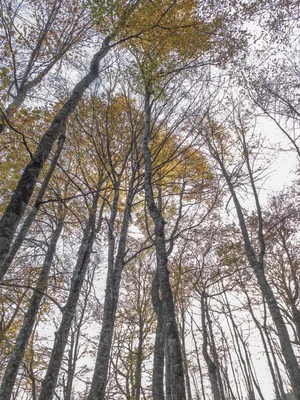
Water, Samothraki, 2018, Thomas Helm